
Publications
Research

Education

News
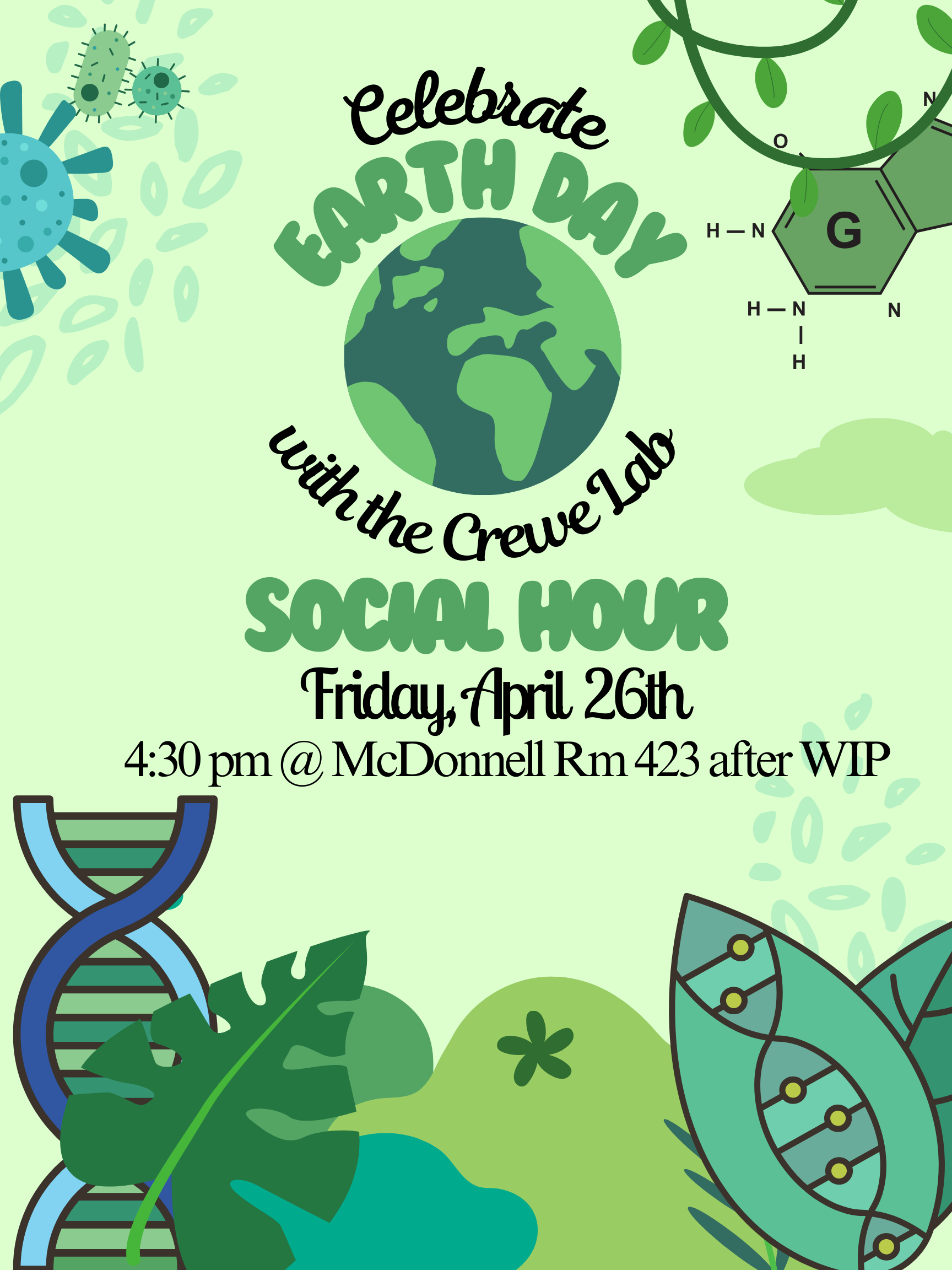
Social Hour hosted by the Crewe Lab
Friday, April 26th | 4:30 PM | McDonnell Sciences, room 423
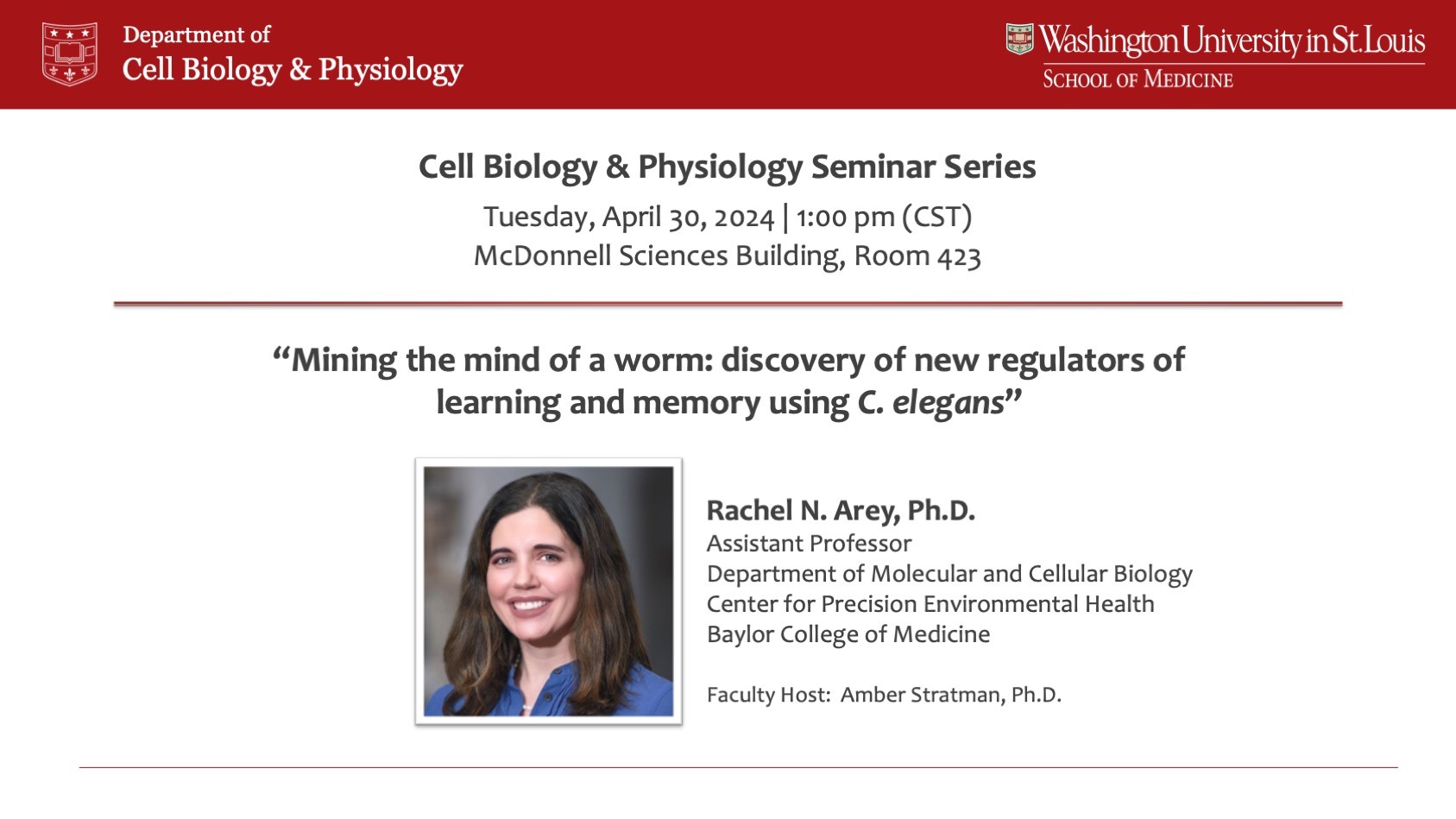
Seminar Series: Rachel N. Arey, Ph.D.
Tuesday, April 30th, 2024 1:00 pm (CST) McDonnell Sciences Building, Room 423
Congratulations to Ken Blumer!
Ken was elected to American Association for the Advancement of Science (AAAS) Kendall Blumer Kendall J. Blumer, a professor of cell biology and physiology at the School of Medicine, is being honored for his contributions to understanding G protein signaling and discoveries about inhibition of an overreactive G protein — G alpha q — that causes […]
Events
-
26 Apr
-
26 Apr
-
30 Apr
Recent Publications
Circuit-based intervention corrects excessive dentate gyrus output in the fragile X mouse model (Links to an external site)
Deng P-Y, Kumar A, Cavalli V, and Klyachko VA
An orally available compound suppresses glucagon hypersecretion and normalizes hyperglycemia in type 1 diabetes (Links to an external site)
Asadi F, Gunawardana SC, Dolle RE, and Piston DW
Identification of distinct vascular mural cell populations during zebrafish embryonic development (Links to an external site)
Colijn S, Nambara M, Malin G, Sacchetti EA, and Stratman AN
WHY WE LOVE ST. LOUIS

Home to beautiful outdoor spaces, charming neighborhoods, unique cuisine, and world-class sports teams, St. Louis is distinct, diverse, and affordable!